National Close the Gap Day
Third Thursday in March
National Close the Gap Day is held on the third Thursday of March each year. It recognises the strength, resilience, and ongoing cultures of Aboriginal and Torres Strait Islander peoples.
The Close the Gap campaign began after Professor Tom Calma’s Social Justice Report (2005). It is based on the right of all Australians equally to have good health and wellbeing.
A national Steering Committee first met in March 2006 and a campaign was officially launched in April 2007. It highlights that better health outcomes are achieved when communities are involved in decisions about policies and services that affect them. National Close the Gap Day encourages organisations and people to learn, share information, AND take action to achieve health equality for First Nations peoples by 2032.
In 2007 the Council of Australian Governments (COAG) accepted the health issues and barriers to well-being faced by Aboriginal and Torres Strait Islander peoples and set targets to track and assess developments to improve health outcomes including closing the life expectancy gap and reducing child mortality.
Health and wellbeing
Burden of disease looks at how illness and early death affect people’s lives. Research shows that around 37% of this burden in Aboriginal and Torres Strait Islander people can be prevented by reducing risk factors such as:
- Smoking and alcohol use
- Unhealthy weight
- Lack of physical activity
- High blood pressure
- Poor diet.
These factors are in the scope of schools and classroom teaching and learning. We all know that without mental and physical well-being, children cannot achieve at school. Whole school, section and classroom activities that are culturally safe and use strengths-based approaches can be organised to recognise and celebrate good health and well-being.
For many years (2008–2018) the approach from the government was top down. Ambitious targets are set by the Council of Australian Governments (COAG). After ten years, only two targets are on track, and the life expectancy gap widened. In 2019, a new approach is developed to be more inclusive of Aboriginal and Torres Strait Islander perspectives. From 2020, is a partnership with Aboriginal groups, has nine socioeconomic targets, four priority reforms (including shared decision-making), and addressing underlying causes of inequality rather than just setting, and failing to meet, ambitious, unachievable targets
2026
The Prime Minister delivered the Commonwealth Closing the Gap 2025 Annual Report and 2026 Implementation Plan on 12 February 2026.
This year’s theme: is Community Voices: The Pathway to Justice, Equality and Healing
Key messages
- Community leadership drives real change
- Listening to lived experience strengthens policy
- Justice and equity happen when governments and people act on community priorities
Image
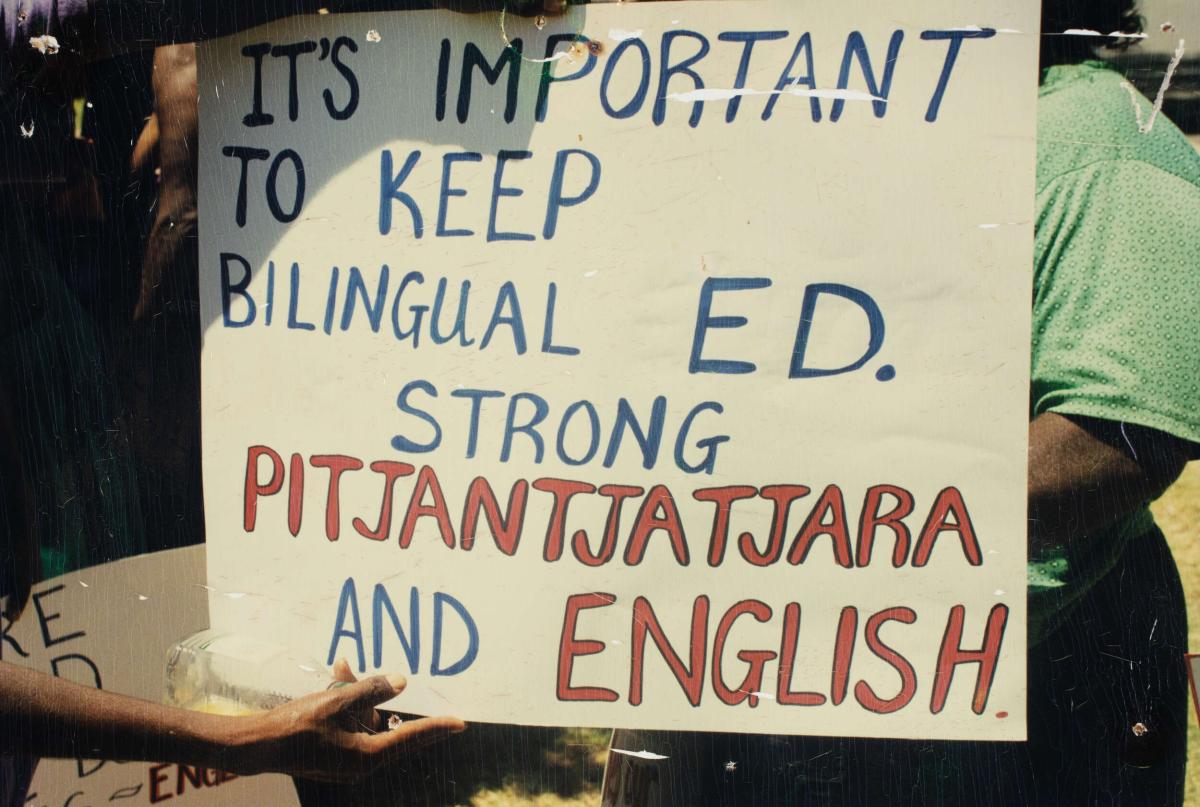
Sign as part of the protest against the threat to Bilingual programs, Utju. Areyonga School Collection. Digital Keeping Place NE1-0139751 | Image
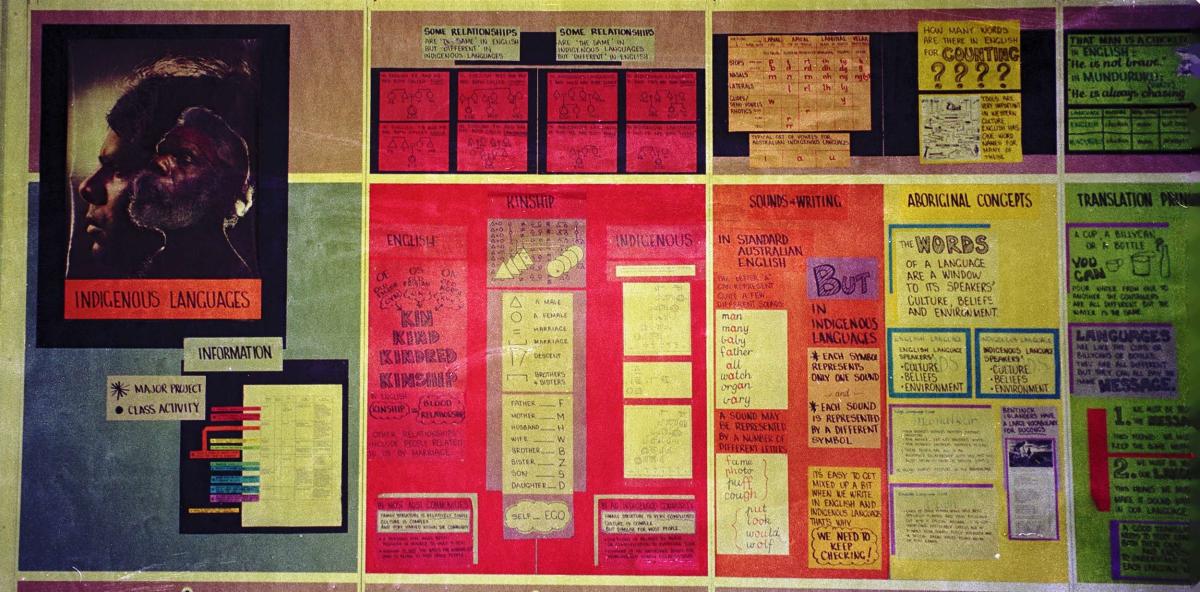
Indigenous Languages: Grade 12 Display, Kormilda College. Phillip Meehan Collection. Digital Keeping Place NE1-0015543 |
Resources
Dates for Closing the Gap Day -There's a day for That
Resources for schools - Closing the Gap Campaign
Closing the Gap - ANTAR
Closing the Gap Resources - Joint Council on Closing the Gap