International Day for the Elimination of Racial Discrimination (IDERD)
21 March
Why do we recognise the date?
Apartheid was a harsh system of racial segregation in South Africa. It was enforced by the government from 1948 until the early 1990s. The system was based on the idea of the supremacy of the minority white population. It gave white people more rights than everyone else. The white minority used the strict laws to control people by racial group: White, Black, Coloured, and Indian. It limited where the Black South African majority could live and work. Their travel was restricted. Millions of people were forced to move to Bantusans (homelands). Interracial marriage was not allowed. Children of mixed heritage were removed from family. Public facilities, housing, and education were segregated and political rights were taken away.
The protest in Sharpeville was planned to be peaceful. Protesters went to the police station without their dompas to show how unfair the law was. The police opened fire on the crowd. Sixty‑nine people were killed and around 180 were injured. This event became known as the Sharpeville Massacre
Nineteen years later, in 1966, the United Nations (UN) declared 21 March as the International Day for the Elimination of Racial Discrimination (IDERD). The day is a time to stand together with people around the world who experience racism. The worldwide stand against racism is guided by the International Convention on the Elimination of Racial Discrimination.
The situation in Australia
The Immigration Restriction Act 1901, commonly known as the White Australia Policy operated in Australia from 1901 to maintain a "white," British-dominated society. The policy was based on a belief in white superiority and its practices lasted until 1958. It aimed for a "purely" white nation and institutionalised racism. It did not allow migration from other countries. From assumption that Indigenous people were an “uncivilised”, it marginalised Aboriginal people through forced a series of policies which had the consequence of social and structural exclusion, and cultural destruction. It resulted in the removal of children (Stolen Generations), restricted movements, denied voting rights in federal elections, and work for rations or enforced low wages.
While South Africans likely got the idea of apartheid from the treatment of Aboriginal and Torres Strait Islander peoples, Australia was also one of the first and strongest voices against apartheid in South Africa. Australia signed the Convention in 1975, and created the Racial Discrimination Act 1975 (Cth). As a policy, White Australia is gone, but as an ideology, ask Aboriginal and Torres Strait Islander people what they think and see if it lives on?
In 1998, the Australian Government conducted a national survey on attitudes to race. The results suggested that many Australians feel uncomfortable talking about racism. Because of this, the focus shifted to promoting “harmony”. In 1999, Australia renamed IDERD as Harmony Day, which later became Harmony Week. This change has been criticised because the use of language reframes antiracism efforts and hides the real, harmful and ongoing effects of racism. It also risks a ‘blame the victim’ attitude.
Today, racism still affects many people across the world, including in the Northern Territory. Aboriginal peoples live approximately 15 years less than other Territorians. Income data (2021 Census & 2024 Reports) identifies that 46% of Aboriginal households have an income under $500 per week (below the poverty line). While education is one of the strongest predictors of lifelong health, attendance rates for Aboriginal children in the Northern Territory are critically low, with recent data (Term 4, 2025) showing a 53.3% attendance rate compared to 71.4% overall. Aboriginal people are 88% of all prisoners. The rate of gaoling black males in South Africa at the end of the Apartheid era (circa 1993) was 851 per 100,000 population. Right now in the Northern Territory it is 3,029 Aboriginal adults are in custody per 100,000. Of the young people in detention, between 96-100% are Aboriginal. The Australian Institute of Health and Welfare highlights that this over-representation is linked to systemic, socioeconomic, and health inequality, as well as the lasting trauma of colonisation.
A recent study Respect at Uni: Study into antisemetism, Islamaphobia, racism and the experience of First Nations People also show high rates of indirect (81%) and direct (36.6%) racism.
Racism can be interpersonal, structural and systemic, meaning it is built into laws, institutions, and everyday systems as well as the attitudes, language and behaviours of individuals and groups. IDERD encourages people to speak out against racism, challenge unfair systems, and works together to create change.
IDERD is an important opportunity to honestly talk about racism in Australia. It encourages us to think about how racism affects our society and ourselves and to renew our commitment to fairness and equality. Real change can only happen when we listen to people who experience racism AND take action.
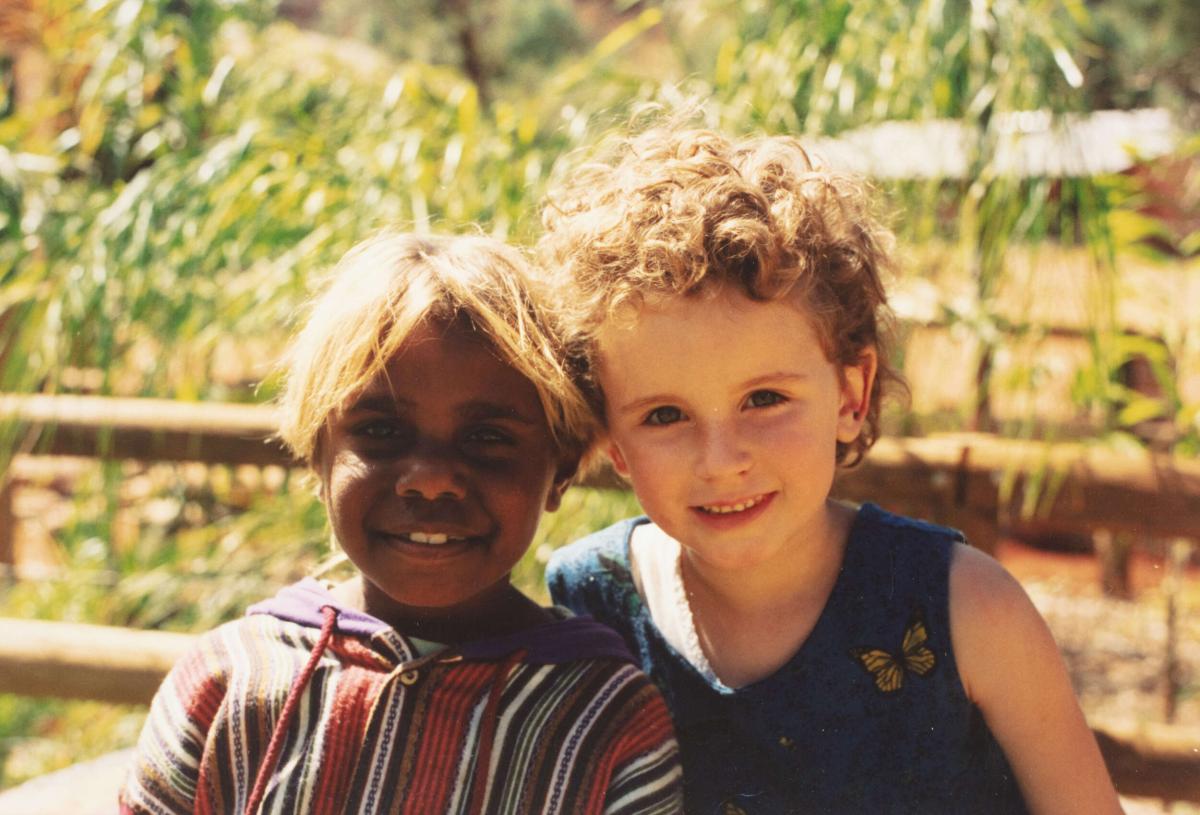
Ampita and Rosa Roberts, Toni Roberts Collection
Digital Keeping Place: NE-0143765
Resources
To assist educators knowledge, self-awareness, and skills, below is a list of suggested readings about the history of Harmony Day and the original intention of IDERD – acknowledging the reality and harms of racism and strategising for change.
- From a massacre in apartheid South Africa to 'feel good' multiculturalism: The dark history of Harmony Day by Ahmed Yussuf, ABC News
- It's the International Day of Eliminating Racial Discrimination. Why does Australia call it 'Harmony Day'? by Dan Butler, NITV (SBS Australia)
- It's Harmony Week, but let's discuss what it is really about: racism by Erwin Renaldi, ABC News
- The corporate world could learn some lessons from the schoolyard when it comes to celebrating multiculturalism by Emma Ruben, ABC News
- Right Wrongs by Aunty Dorrie Moore, ABS
- Brass Discs, Dog Tags and Finger Scanners: The Apology and Aboriginal Protection in the Northern Territory 1863-1972 by Stephen Gray
- An Anti-Racism Framework: Voices of First Nations Peoples Human Rights Commission
- Anti-Racism Kit by School children for School children
- Narragunnawali Reconciliation Australia -
- Racism. It Stops With Me Australian Public Service Commission
- Stolen Generations Teaching Resources Human Rights Commission
- Still becoming – a Series of four animated stories created by GARUWA, in collaboration with the Race Discrimination team at the Australian Human Rights Commission.